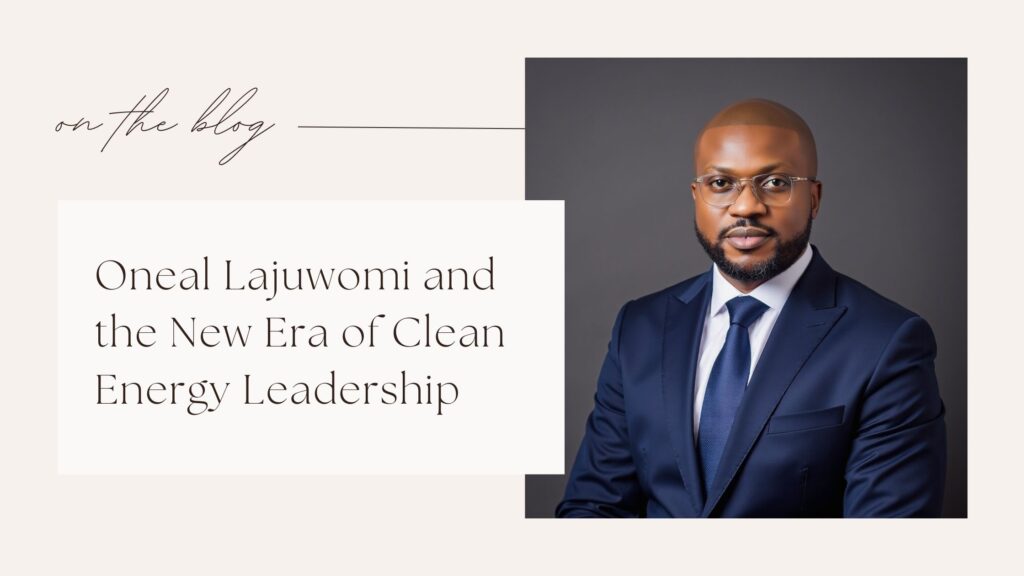
Introduction: Leadership in a Changing Energy Landscape
Clean energy is no longer a niche concern—it’s central to how nations plan their economies, businesses frame their strategies, and communities secure their futures. The world needs leaders who can navigate not just technology, but also the social, financial, and environmental dimensions of this transition. Oneal Lajuwomi’s career offers a useful case study in what modern energy leadership can look like, and the lessons extend far beyond one individual.
1. Clean Energy Leadership Is About Systems, Not Just Technology
Too often, the focus in renewable energy is on the technology itself—solar panels, wind turbines, or battery storage. But leadership today requires systems thinking. That means understanding how policies, financing, cultural contexts, and infrastructure interact.
Takeaway for readers: If you’re entering the clean energy field, don’t limit your expertise to technical know-how. Broaden your perspective to see how technologies fit within larger social and economic systems.
2. Decentralization Brings Resilience
One of the most important shifts in recent years is the move toward decentralized energy models: microgrids, community solar, and localized storage. Oneal Lajuwomi and other leaders in the sector highlight how these models empower communities that are traditionally underserved by national grids.
Why this matters: For policymakers and innovators, decentralization means cleaner energy is not just a climate solution—it’s also a tool for energy access and resilience in regions vulnerable to climate shocks.
3. Data and Digital Tools Are Non-Negotiable
Energy systems are becoming “smarter” with real-time analytics, predictive maintenance, and AI-driven energy management. Leaders who integrate these tools can improve efficiency, cut costs, and adapt systems faster.
Actionable insight: Whether you’re working in utilities, engineering, or policy, developing data literacy will be as important as understanding kilowatts.
4. Leadership Requires Bridging Finance and Sustainability
One persistent barrier in renewable energy adoption is cost. Forward-thinking leaders create models that attract private capital without sidelining community needs. This is where sustainable finance comes in—crafting investment structures that prove clean energy projects can be both profitable and socially impactful.
What readers can apply: If you’re considering a career in clean energy, skills in finance, economics, or project management are just as critical as engineering.
5. People and Communities Are Central
Perhaps the most overlooked aspect of energy leadership is human capital. Training local workforces, involving community voices, and building long-term ownership are strategies that ensure clean energy projects succeed beyond the initial installation.
Lesson to remember: A solar array or wind turbine is only as sustainable as the community that maintains and benefits from it.
6. Overcoming Persistent Barriers
Even with innovation, challenges remain:
- Policy misalignment can delay adoption.
- Storage limitations make renewable integration harder.
- Financing gaps block projects in emerging markets.
Leaders like Oneal Lajuwomi emphasize not just identifying these problems but working across disciplines to address them.
Reader value: Recognize that clean energy isn’t only about invention—it’s about solving practical, on-the-ground challenges.
Conclusion: A Blueprint for Future Leaders
Clean energy leadership for the modern era means more than adopting new technologies. It requires vision that blends technical innovation with social inclusion, economic strategy, and long-term resilience. By studying leaders like Oneal Lajuwomi, students, entrepreneurs, and policymakers can see a blueprint for how to approach energy in ways that are adaptable, human-centered, and future-ready.
Final takeaway: If you want to lead in clean energy, ask not just “How do we power the grid?” but also “How do we empower people?”